Wednesday, November 10, 2010

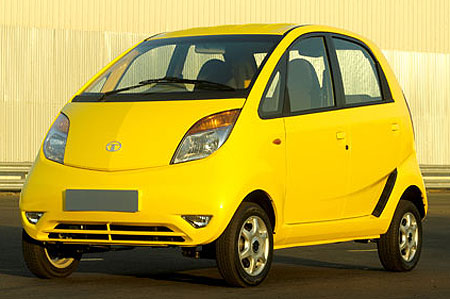
Tata Motors to recall some Nanos, numbers not yet decided


Tata Motors on Wednesday said it will be recalling some of its small car Nano to install safety measures to prevent the vehicle catching fire. "Yes, customers have been informed. Some have been already recalled," Tata Motors Managing Director (India Operations) PM Telang told PTI. There are about 70,000 Nanos on the Road , He Added.

When asked how many vehicles would be recalled, Telang said: "We don't know exactly how many vehicles will be recalled as we have to check how many Nanos have to be rectified." on Tuesday, Tata Motors Group CEO and Managing Director Carl-Peter Forster had said that the auto maker planned to introduce additional safety features in the small car in the wake of reports of the car catching fire.

"The company has taken up several corrective measures and will now offer cover tool on catalytic converter to prevent the car from catching fire. It will also install fuse in electrical components to avoid short circuits," he had said.

In August, a sixth incident of a Nano catching fire since the car was commercially launched in March 2009, was reported from the national Capital, three months after a company probe declared the car was "absolutely safe".

In May, the company had declared that an expert team had found 'no manufacturing defects' in the Nano.

The five previous incidents were reported from across the country, including Mumbai, Lucknow, Delhi and near Vadodara in Gujarat.

China, US aid to Pak will adversely impact India: Mishra

NEW DELHI: Chinese and American military aid to Pakistan will "adversely impact" India's national security and there are "clear signs" that Beijing will not allow New Delhi to play a greater role in Asia and global affairs, former National Security Adviser Brajesh Mishra said on Wednesday.

"There are clear signs that China will not allow India to play a greater role in Asia and global affairs. It is for this reason that 'all-weather relationship' between China and Pakistan has evolved into a virtual military alliance," Mishra said said at the national security seminar organised by United Service Institutions of India (USI).

His inaugural address was read out in absentia. "The irony is that the American policy in Af-Pak region, which includes a largesse of billions of dollars and military equipment including F-16 (fighter) aircraft, has the same adverse impact on our national security as China's assistance to Pakistan," he said.

His comments come close on the heels of Army Chief General V K Singh's comments that India was "not sure" of China's intentions for building infrastructure and military strength on the borders.

Mishra said China's intentions to not let India play its role in the region and the world was "clear" from the changed attitude on Jammu and Kashmir, construction of roads and rail system to Gwadar port, executing projects in Pakistan-Occupied Kashmir (POK), the new nuclear deal, and supply of defence equipment to Pakistan.

"All this (is) meant to keep India embroiled with Pakistan, so that india is unable to play a significant role outside South Asia," he added.

China has recently denied visas to an Indian Army Commander from Jammu and Kashmir and issued stapled visas to residents of the border state, apart from building reliable road and railway system to Gwadar port and executing infrastructure projects in Pakistan-Occupied Kashmir (POK).

Mishra said, one of China's miscalculations and strategic error was transfer of nuclear technology to Pakistan which encouraged India to build its own nuclear weapons.

"But China was so convinced that India was building nuclear weapons that it helped Pakistan build nuclear weapons, forcing India to start its nuclear weapons programme," he added.

The former NSA said even after US President Barack Obama's "great speeches" during his just concluded visit to India, the content of the strategic partnership between the two countries "benefits" the US more than India.

"All the business deals done, the lifting of sanctions on the Entity List, giving us more defence equipments we require urgently, like the other business deals, benefits US in a commercial way," he noted.

Holcim warns on 2010 as India monsoon hits Q3

ZURICH: Holcim, the world's second-largest cement maker, warned that meeting last year's key profit levels will be a challenge after third-quarter income was hit by sliding Indian cement prices due to a harsh monsoon.

Holcim net income attributed to shareholders fell 19 per cent to 544 million Swiss francs ($566.5 million), beating a forecast for 495 million francs in a Reuters poll.

However, operating earnings before interest, taxation, depreciation and amortisation (EBITDA) -- which Holcim sees as its key performance indicator -- fell 16 per cent to 1.234 billion francs, missing an average forecast for 1.4 billion.

Holcim expects the European and North American construction markets -- which contribute almost half its sales -- to stay subdued and said it would be challenging for the group to match the previous year's operating EBITDA of 4.63 billion francs.

Holcim shares, which have fallen 17 per cent this year compared to a 3 per cent fall for the DJ Stoxx European construction index, were indicated down 3 per cent, according to pre-market data from Clariden Leu.

Holcim holds 46 per cent stakes in both ACC Ltd and Ambuja Cements Ltd , India's second and third-biggest cement producers, making it the European cement group most exposed to India. Both already reported a weak third quarter.

Holcim said it was hit by falling prices in important markets, including India, Europe and the United States, and higher variable production and distribution costs.

"Holcim was severely affected by this in India. The onset of the monsoon -- which was particularly harsh this year - prompted a slide in cement prices right across the country," it said.

However, it predicted a rapid rise in demand for building materials after the monsoon.

French group Lafarge, the world's biggest cement producer, posted disappointing third-quarter results last week, with sales down 2 per cent to 4.5 billion euros. Mexican company Cemex, the world's No. 3, blamed weak revenue from its key European and US markets for its quarterly loss.

However, German rival HeidelbergCement beat expectations for quarterly profit as US states started dipping into federal funds for highway projects.

Monday, November 8, 2010

Proud to visit India so early in presidency: Obama


NEW DELHI: It was no coincidence that India was the first stop of his visit, US President Barack Obama said on Monday while addressing the joint sitting of parliament during which he recalled the inspirational powers of Mahatma Gandhi and the ancient Indian civilisation.

"Thank you for the great honour of addressing the representatives of more than one billion Indians of the world's largest democracy," Obama said to thunderous applause, adding that he brought "greetings and friendship from the world's oldest democracy, including three million proud and patriotic Indian Americans".

He said that during the last three days, he and his wife Michelle had been welcomed at every stop with the hospitality for which Indians are known.

"I am proud to visit India so early in my presidency," he said, adding that it was no coincidence that India was his first stop in the Asia visit.

"India is not simply emerging, India has emerged," he reiterated to another round of thunderous applause.

It was his firm belief, he said, that the India-US relationship was one of the "prime partnerships of the 21st century".

"This is the partnership I have come here to build."

Stating that India was a civilisation that had been shaping the world for thosuands of years, he said: "Our information age is rooted in Indian innovations including the number zero."

Obama also recalled the words of Rabindranath Tagore - "where the mind is without fear and the head is held high" -- and Mahatma Gandhi's immortal diktat to be the change that you seek.

"I might not be standing before you as president of the United States had it not been for Gandhi and his message."

Harbhajan & Laxman Saves Ahmedabad Test

Following are the statistical highlights of the final day of the first Test between India and New Zealand in Ahmedabad.

# Harbhajan Singh (115) has recorded his maiden hundred in First-class cricket - the 100th for India in the second innings in Tests.

# Harbhajan's match tally of 184 (69 + 115) is his best as a batsman in Tests. The said tally is the highest by a number eight batsman for India.

# Harbhajan has posted a fifty-plus in each innings of a Test match for the first time.

# He is the tenth Indian to complete a hundred with a six in Tests.

# Tim McIntosh has posted a PAIR in Tests. His fifth duck in Tests is his third against India.

# McIntosh became the sixth New Zealander to record a PAIR against India, joining A.R. MacGibbon, G.B. Troup, C.M.Kuggeleijn, M.C.Snedden and P.J.Wiseman (twice) - one each at Wellington in 1998-99 and Kanpur in 1999-00

# Brendon McCullum (6-1-18-0) has bowled for the first time in any international match/first-class cricket.

# Under Daniel Vettori's captaincy, New Zealand have drawn eight Tests, won six and lost 14 out of 28 contested - winning % 21.42.

# Ross Taylor (4.4-2-4-2) has recorded his best bowling performance in Tests.

# Zaheer Khan has registered his 20th duck in Tests - his fourth against New Zealand.

# Zaheer and Bishan Singh Bedi have recorded 20 Test ducks each and only Bhagwat Chandrasekhar has registered more Test ducks (23) for India.

# New Zealand's last Test victory in India was 22 years ago by 136 runs at Wankhede Stadium, Mumbai in November 1988.

# Of the last eight Tests played between India and New Zealand in India, seven could not produce results.

# Mahendra Singh Dhoni's winning % is now 63.15 in Tests - 12 wins, two losses and five drawn games out of 19 played.

# VVS Laxman now averages 58.13 in third match innings - 2093 runs in 45 innings - the highest by an Indian batsman (minimum qualification: 1000 runs).

# Laxman and Harbhajan were associated in a seventh wicket stand of 163 - India's highest against New Zealand, bettering the 128 between Sachin Tendulkar and Kiran More at Napier in February 1990.

# India's aforesaid stand is the highest for the seventh wicket at Motera, beating the 154 between Imran Khan and Ijaz Faqih for Pakistan against India in March 1987.

# Laxman's 47th fifty in Tests is his fifth against New Zealand is his 47th in Test cricket. His previous two innings in the nineties were 95 against Australia at Kolkata in 1997-98 and 90 against Pakistan at Faisalabad in 2005-06.

# Harbhajan became just the second number eight batsman to register a fifty and a century in a Test match, joining Eric Dalton (South Africa) - 117 and 57* (174) against England at The Oval in 1935.

# Harbhajan's great knock is the third best by number eight batsman in India - the highest two innings are - 132 not out by Mahendra Singh Dhoni against South Africa at Kolkata in February this year and 116 by Kapil Dev against England at Kanpur in January/February in 1982.

# Harbhajan Singh has received his first Man of the Match award for his batting prowess - his sixth in Test Cricket - his first against New Zealand.

This Is India

India officially the Republic of India (Hindi: भारत गणराज्य Bhārat Gaṇarājya; see also official names of India), is a country in South Asia. It is theseventh-largest country by geographical area, the second-most populous country with over 1.18 billion people, and the most populous democracy in the world.[16]Mainland India is bounded by the Indian Ocean on the south, the Arabian Sea on the west, and the Bay of Bengal on the east; and it is bordered by Pakistan to the west;[note] Bhutan, the People's Republic of China and Nepal to the north; and Bangladesh and Burma to the east. In the Indian Ocean, mainland India and theLakshadweep Islands are in the vicinity of Sri Lanka and the Maldives, while India's Andaman and Nicobar Islands share maritime border with Thailand and theIndonesian island of Sumatra in the Andaman Sea.[17] India has a coastline of 7,517 kilometres (4,700 mi).[18]Home to the ancient Indus Valley Civilisation and a region of historic trade routes and vast empires, the Indian subcontinent was identified with its commercial and cultural wealth for much of its long history.[19] Four of the world's major religions—Hinduism, Buddhism, Jainism and Sikhism—originated here, whileZoroastrianism, Judaism, Christianity and Islam arrived in the first millennium CE and shaped the region's diverse culture. Gradually annexed by the British East India Company from the early eighteenth century and colonised by the United Kingdom from the mid-nineteenth century, India became an independent nation in 1947 after a struggle for independence which was marked by a non-violent resistance led by Mahatma Gandhi.India is a federal constitutional republic with a parliamentary democracy consisting of 28 states and seven union territories. A pluralistic, multilingual and multiethnic society, India is also home to a diversity of wildlife in a variety of protected habitats. The Indian economy is the world's eleventh largest economy by nominal GDP and the fourth largest by purchasing power parity. Since the introduction of market-based economic reforms in 1991, India has become one of thefastest growing major economies in the world;[20] however, the country continues to face several poverty, illiteracy, corruption and public health related challenges. India is classified as a newly industrialised country and is one of the four BRIC nations.[21][22] It is the world's sixth de facto nuclear weapons state and has thethird-largest standing armed force in the world, while its military expenditure ranks tenth in the world.[23] India is a regional power in South Asia.[24]It is a founding member of the United Nations, the Non-Aligned Movement, the World Trade Organization, the South Asian Association for Regional Cooperation, the East Asia Summit, the G20 and the G8+5; a member of the Commonwealth of Nations; and an observer state in the Shanghai Cooperation Organisation.

 
>>> from Google import Google, search >>> results = search(‘indiaisamazing.blogspot.com’, 3) >>> for result in results: … print ‘Title: %s’ % (result.title()) … print ‘Url: %s’ % (result.url()) … print ‘Description: %s’ % (result.description()) … print